From a slow leak behind the drywall to a full basement flood, Forest property owners call Aqua Guard Water Damage because we show up with the right gear the first time — no guesswork, no upsells at the door.
Call +1-844-578-1604 Now
Our Forest technicians hold IICRC water restoration certifications and carry that training into every job, from a Category 1 clean-water leak to a Category 3 sewage backup. We're not a call center routing you to a random subcontractor; we're the crew that shows up.
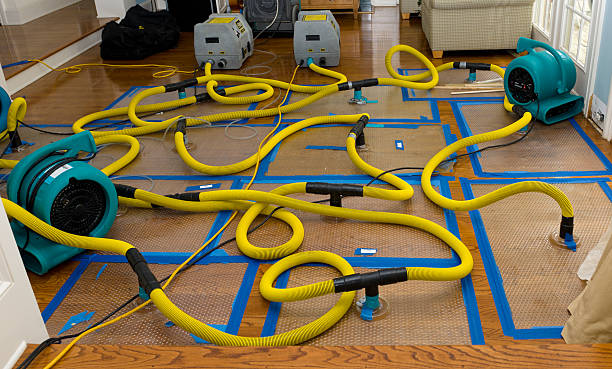
Every technician on our Forest roster is background-checked, licensed, and insured, and every truck is stocked with commercial-grade air movers, low-grain-refrigerant dehumidifiers, and antimicrobial treatment for contaminated water intrusion.
We invest in ongoing training as drying standards and equipment evolve, rather than treating a technician's initial certification as the finish line.

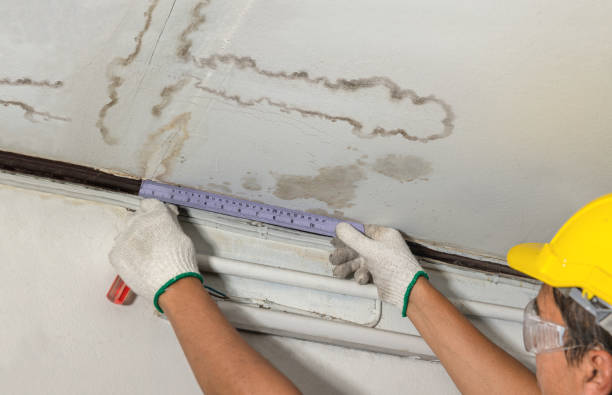
A stain that keeps reappearing after you paint over it is a signal, not a coincidence — the moisture source behind the wall hasn't been addressed and needs a moisture meter reading, not a fresh coat of paint. Repainting without finding the source just hides the problem for a few more weeks.
If opening windows and running a fan doesn't clear the smell within a day, the moisture source is still active and needs professional extraction, not just ventilation. A smell that returns after cleaning is a strong sign the moisture is still present.
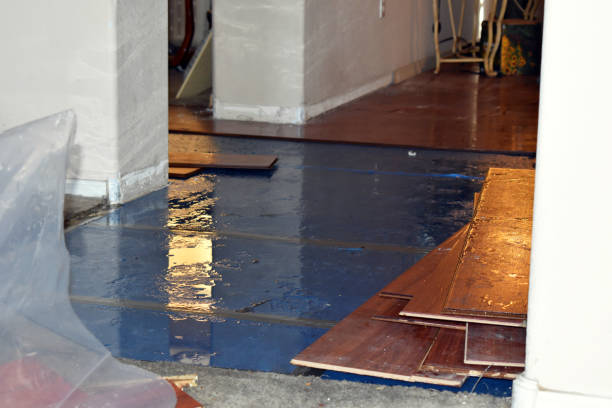
Hardwood that's cupping at the edges or laminate that's separating at the seams is a classic sign of moisture intrusion from below, whether that's a slab leak or groundwater seepage. The longer it sits, the harder the flooring is to salvage.
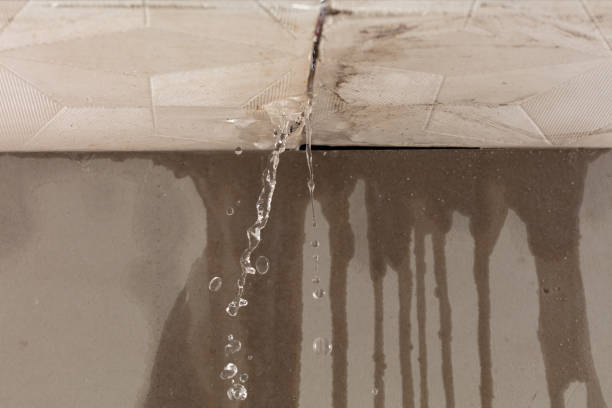
A running-water sound when every fixture in the house is off is a strong sign of a hidden leak feeding your rising bill.
Wallpaper that lifts at the seams after being fine for years is often a sign that humidity or a slow leak has changed the moisture level inside that wall.
Mold that returns after cleaning with bleach is a sign the underlying moisture source was never addressed, since surface cleaning does nothing for saturated material behind the wall.
Our Water Damage Repair process covers every stage of a water loss, from the first extraction pass to the final coat of paint, so you're never left coordinating separate contractors mid-project.
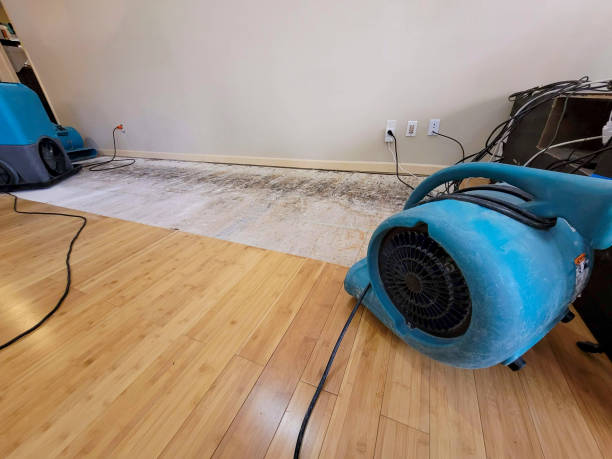
Standing water gets removed with commercial extraction equipment first, then we run moisture readings across every affected surface so the drying plan targets what's actually still wet, not what looks dry on the surface.
We place industrial air movers and low-grain-refrigerant dehumidifiers based on psychrometric readings, then log moisture levels daily until every affected material returns to a safe drying standard.
Our sewage cleanup protocol follows IICRC S500 contamination standards, isolating the affected area, removing unsalvageable materials, and disinfecting every surface that had contact with blackwater.
If mold has already taken hold, our containment and remediation process isolates the affected zone with negative air pressure before any demolition begins, keeping spores from spreading to unaffected rooms.
We handle everything from replacing water-damaged drywall and insulation to refinishing floors, so the property is restored to pre-loss condition under one contract instead of three.
We inventory and pack out contents that need to leave the affected area during drying, then coordinate their return once the space is verified dry and repairs are complete.


Dispatch asks enough to prep the right equipment before the truck even leaves, so the crew isn't guessing what they'll find on arrival.
The assessment sets the entire plan — skipping it or rushing it is how jobs end up with hidden moisture pockets months later.
Standing water comes out first with truck-mount equipment, then air movers and dehumidifiers go to work based on the psychrometric numbers we recorded.
Once moisture readings confirm the structure is dry, we hand you documentation and move into any needed reconstruction.
Insurance and licensing aren't just paperwork here — they're what let us stand behind the work if something doesn't go as planned.
Trucks are staged regionally so a crew can typically reach you well before a national chain's call center even finishes your intake form.
We'd rather explain the cost clearly upfront than have that conversation after the job is already underway.
We stand behind every job with a documented re-inspection before we consider the work complete.
We'd rather run drying equipment an extra day at our own cost than close out a job with a moisture reading we're not confident in.
That same standard applies whether it's a single flooded bathroom or a full commercial loss — the sign-off criteria don't change based on job size.
Call +1-844-578-1604Whether your address falls in 24551 or one of the neighboring zip codes we cover, the same crew and the same response standard applies.
Coverage isn't limited to the city center — our Forest routes extend out to the surrounding suburbs so outlying addresses aren't treated as an afterthought.

"A pipe burst behind our water heater and the crew here in Forest had extraction units running within 40 minutes of my call. They walked me through the moisture readings every day until it was fully dry."
James R., Forest"What impressed me most was the daily moisture log — I could actually see the numbers improving instead of just being told to trust the process."
Denise M., Forest"The sewage backup in our laundry room was handled with full PPE and proper disposal of the ruined flooring. I appreciated that they explained the Category 3 contamination process before starting."
Marcus T., Forest"Fast response, clear pricing, and they coordinated directly with my insurance adjuster which saved me a huge headache during a stressful week."
Priya S., Forest"We had a slow leak we didn't notice for weeks and the crew found moisture in places we never would have checked using thermal imaging."
Carlos V., Forest"They minimized business disruption by sectioning off the wet area instead of shutting down the whole space during drying."
Angela F., Forest"A cracked supply line under the kitchen sink went unnoticed for days and by the time we called, the subfloor was saturated. The crew pulled the damaged material and had drying equipment running within the hour."
Tyrone B., Forest"Storm runoff got into our crawl space and the smell alone told us something was wrong. The crew found the vapor barrier had failed and fixed the actual cause, not just the symptom."
Wendy K., Forest